
Best Fish Finder for Small Boats
1.Garmin Striker Vivid 5cv, Easy-to-Use 5-inch Color Fishfinder and Sonar Transducer, Vivid Scanning Sonar Color Palettes (010-02551-00)
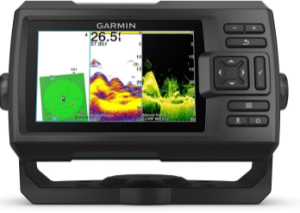
The Garmin STRIKER Vivid 5cv is an excellent choice for anglers looking for one of the best fish finders for small boats. Its 5-inch color display provides a useful balance between visibility and compact size, making it suitable for boats where console and mounting space are limited. The easy-to-use interface and vivid sonar color palettes help anglers distinguish fish from underwater structure more easily. Garmin specifies an 800 × 480-pixel WVGA color display and an IPX7 water rating.
One of the main strengths of the STRIKER Vivid 5cv is its sonar capability. It supports Garmin CHIRP traditional sonar for displaying fish arches and CHIRP ClearVü scanning sonar for viewing fish and structure beneath the boat. A compatible transducer is required for these sonar functions, and Garmin offers configurations both with and without a transducer.
The vivid color palettes are particularly useful when fishing from a small boat because they make sonar information easier to interpret at a glance. With seven vivid color options, anglers can select a presentation that provides good contrast for the conditions and their viewing preference.
For small-boat anglers who regularly fish the same lakes, rivers, or coastal areas, the built-in high-sensitivity GPS is another valuable feature. You can mark productive fishing spots, boat ramps, docks, and other locations as waypoints. The GPS can also help you create routes and display your boat’s speed, making the fish finder useful for more than simply locating fish.
The waypoint feature is especially convenient when you discover a productive area. Instead of trying to remember where you caught fish, you can save the location and return to it later.
The built-in Garmin Quickdraw Contours mapping system adds another useful feature for small-boat fishing. It allows you to create maps of the waters you fish and display bottom contours and depth information. Garmin states that the STRIKER Vivid 5cv can store up to 2 million acres of maps with 1-foot contours.
This can be particularly useful on less-charted waters because you can build your own contour map as you explore. Quickdraw Contours records sonar and GPS information to create contour maps, helping you understand underwater depth changes and potentially identify promising fishing areas.
The STRIKER Vivid 5cv measures approximately 7.4 × 4.5 × 2.1 inches and weighs about 1 pound, making it relatively compact for a dedicated GPS fish finder. It also has a tilt/swivel mount and mounting hardware, which can make installation more convenient on a small boat.
Its compact dimensions are one reason this model fits well on smaller fishing boats. You get a 5-inch display without needing the console space required by larger 7- or 9-inch fish finders.
Specifications
- Display size: 5 inches
- Display type: WVGA color
- Display resolution: 800 × 480 pixels
- Sonar: Garmin CHIRP traditional and CHIRP ClearVü
- Traditional sonar frequencies: 50/77/200 kHz CHIRP
- ClearVü frequencies: 260/455/800 kHz
- Transmit power: 500 W RMS
- GPS: Built-in high-sensitivity GPS
- Mapping: Garmin Quickdraw Contours
- Waypoints: Up to 5,000
- Routes: Up to 100
- Track log: 50,000 points / 50 saved tracks
- Water rating: IPX7
- Dimensions: 7.4 × 4.5 × 2.1 inches
- Weight: Approximately 1.0 lb
- Current draw: 0.40A at 12V
- Transducer connection: One 4-pin port
Pros
- 5-inch color display provides a good balance between viewing area and compactness.
- Vivid sonar color palettes make fish and underwater structure easier to distinguish.
- CHIRP traditional sonar provides useful fish-target information.
- CHIRP ClearVü scanning sonar provides detailed views of fish and structure beneath the boat when used with a compatible transducer.
- Built-in high-sensitivity GPS allows you to mark and return to productive fishing locations.
- Quickdraw Contours mapping allows anglers to create detailed maps while fishing.
- Compact and lightweight design works well on small boats.
- IPX7 water rating provides protection against water exposure.
Cons
- 5-inch display may feel small to anglers who prefer a large screen or extensive split-screen views.
2.Lowrance HDS PRO Fishfinder/Chartplotter with Smartphone Integration and Preloaded C-MAP U.S. & Canada Charts
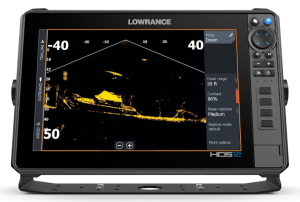
The Lowrance HDS PRO 10 is a premium choice for anglers looking for one of the best fish finders for small boats when advanced sonar, detailed mapping, and live-fishing capabilities are priorities. Although its 10-inch display is larger than what many compact boats require, it can be an excellent option for a small fishing boat with enough console or mounting space. Its combination of a high-definition touchscreen, advanced imaging, live sonar compatibility, and detailed charts makes it particularly appealing to serious anglers.
The large 10-inch SolarMAX HD touchscreen is one of the main highlights of this fish finder. The crisp, bright display is designed to remain easy to view from extreme angles, which is useful when moving around a small boat while fishing. It is also designed to remain visible when wearing polarized sunglasses, helping reduce the common problem of screen visibility while fishing outdoors.
The larger display gives you plenty of room to examine sonar returns, charts, and underwater structure. For a small boat with adequate mounting space, the 10-inch screen can make sonar information much easier to interpret than a smaller display.
Another major advantage is compatibility with ActiveTarget 2 and ActiveTarget 2 XL live sonar. This technology allows anglers to watch fish behavior in real time and observe how fish react to a lure. For anglers who want to understand fish behavior rather than simply identify fish beneath the boat, this can provide a significant advantage.
The system supports dual ActiveTarget configurations, giving serious anglers the ability to expand their live-sonar setup. This makes the unit particularly attractive for anglers who want an advanced fish-finding system that can grow with their fishing needs.
The included Active Imaging HD 3-in-1 transducer provides several sonar views in one system. It combines high-definition CHIRP sonar with SideScan and DownScan Imaging, allowing anglers to examine the underwater environment from different perspectives.
CHIRP sonar helps identify fish and separate targets, while DownScan Imaging provides detailed views directly beneath the boat. SideScan expands the viewing area to the sides of the boat, helping anglers locate structure, vegetation, drop-offs, and other potentially productive areas without having to travel directly over them.
FishReveal with SideScan adds another useful layer to the sonar system. It combines CHIRP sonar’s target separation capabilities with SideScan imaging to make fish easier to identify around underwater structure.
This can be particularly useful when fishing around cover because fish can sometimes blend into structure on traditional imaging. By combining sonar target information with SideScan imagery, the system gives anglers more information when determining whether a promising area actually contains fish.
The fish finder also comes with C-MAP DISCOVER OnBoard charts, providing detailed preloaded mapping for supported waters. The supplied chart coverage includes 1-foot contours on more than 19,000 U.S. lakes and 9,400 Canadian lakes, making the mapping system useful for anglers who regularly fish mapped North American waters.
Detailed contours can help anglers identify changes in depth, channels, drop-offs, humps, and other underwater features. For a small boat, this can be especially helpful because knowing the depth and structure ahead of time can make navigation and fishing more efficient.
Key Specifications
- Display: 10-inch SolarMAX HD touchscreen
- Display type: High-definition touchscreen
- Live sonar: ActiveTarget 2 and ActiveTarget 2 XL ready
- Transducer: Active Imaging HD 3-in-1 included
- Sonar: High-definition CHIRP
- Imaging: SideScan and DownScan Imaging
- Fish detection: FishReveal with SideScan
- Mapping: C-MAP DISCOVER OnBoard charts
- Chart contours: 1-foot contours on supported charts
- U.S. lake coverage: 19,000+ lakes
- Canadian lake coverage: 9,400+ lakes
- Primary controls: Touchscreen
- Best suited for: Small fishing boats with sufficient mounting space and serious anglers
Pros
- Large 10-inch SolarMAX HD touchscreen provides excellent viewing space.
- Visible through polarized lenses, making the screen practical for bright outdoor conditions.
- ActiveTarget 2 and 2 XL compatibility provides an upgrade path to advanced live sonar.
- Active Imaging HD 3-in-1 transducer included provides multiple sonar views.
- CHIRP sonar helps improve fish-target separation.
- SideScan Imaging provides a wider view of underwater structure.
- DownScan Imaging provides detailed views beneath the boat.
- FishReveal with SideScan helps distinguish fish from surrounding structure.
- Preloaded C-MAP DISCOVER charts provide extensive mapping coverage.
- 1-foot contours can make underwater depth changes easier to identify.
Cons
- 10-inch display may be too large for very small boats with limited console space.
3.Humminbird Helix 7 G4 GPS Fish Finder with Transducer, MEGA Side Imaging
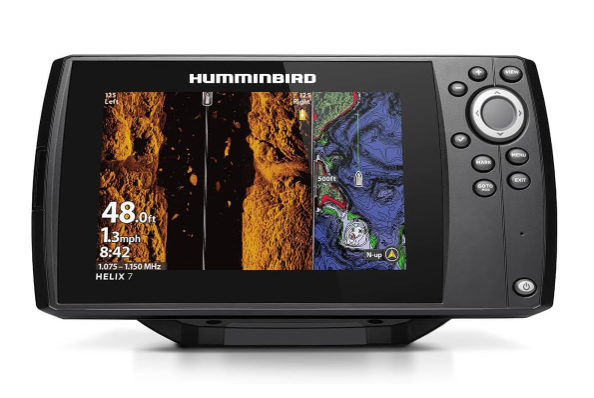
The Humminbird HELIX 7 CHIRP MSI GPS G4N is a powerful option for anglers searching for one of the best fish finders for small boats. It combines detailed MEGA Side Imaging and MEGA Down Imaging, Dual Spectrum CHIRP sonar, GPS navigation, and real-time mapping in a relatively compact fishing electronics system. For small-boat anglers who want advanced sonar without moving to an oversized display, this fish finder offers an impressive balance of functionality and usability.
One of the standout features is MEGA Side & Down Imaging Technology, which provides detailed views of fish, underwater structures, and contours. The system can display information up to 125 feet on either side of the boat and 125 feet directly beneath the watercraft. Humminbird’s MEGA imaging technology provides up to three times more detail than standard imaging sonar, making it easier to examine underwater features.
The included transducer means anglers have the necessary hardware to take advantage of the unit’s imaging capabilities. Side Imaging is particularly useful for scanning areas beside the boat, while Down Imaging focuses directly beneath the watercraft. Together, they provide a broader picture of the fishing environment without requiring the boat to pass directly over every potential target.
The Dual Spectrum CHIRP Sonar system provides detailed views of fish arches and fish-holding structures. It offers two scanning modes designed for different fishing situations. Wide Mode provides maximum coverage, allowing you to search larger areas quickly, while Narrow Mode concentrates the sonar beam for more detailed scanning.
The precise 2D target separation is powered by a Low-Q transducer, helping anglers distinguish individual fish and identify underwater structure more effectively. This makes the fish finder useful when searching for fish around vegetation, rocks, drop-offs, and other areas where multiple sonar returns can otherwise become difficult to interpret.
For small-boat anglers who regularly explore unfamiliar waters, the built-in GPS and mapping capabilities add significant value. The unit comes equipped with Humminbird Basemap, providing coverage of more than 10,000 lakes and continental U.S. coastlines.
The system is also compatible with premium LakeMaster, CoastMaster, and Navionics charts, giving anglers the option to expand their mapping capabilities. GPS navigation can help you mark productive fishing locations, identify important areas, and navigate more confidently while spending time on the water.
Another useful feature is AutoChart Live, which allows anglers to create their own maps while boating. The system can record depth contours, bottom hardness, and vegetation, helping you build a more detailed picture of the water you are fishing.
The unit provides eight hours of built-in recording time, while compatible AutoChart Zero Line SD cards can be used when additional mapping capacity is required. This is especially useful when fishing waters that may not have sufficiently detailed existing charts.
Unlike touchscreen-only fish finders, this model uses a softkey-controlled keypad interface. The menu system is designed to remain practical in different weather conditions, including situations where operating a touchscreen may be inconvenient.
The intuitive button layout provides access to preloaded views and settings without requiring complicated menu navigation. For small-boat anglers who fish in rain, spray, or cold conditions, physical controls can be a useful advantage because they can be operated reliably without depending entirely on a touchscreen.
Key Specifications
- Sonar technology: MEGA Side Imaging and MEGA Down Imaging
- Side Imaging range: Up to 125 feet on either side
- Down Imaging range: Up to 125 feet directly beneath the boat
- Traditional sonar: Dual Spectrum CHIRP
- Scanning modes: Wide Mode and Narrow Mode
- Transducer: Included
- Target separation: Precise 2D target separation
- GPS: Built-in GPS
- Mapping: Humminbird Basemap
- Basemap coverage: 10,000+ lakes and continental U.S. coastlines
- Additional chart compatibility: LakeMaster, CoastMaster, and Navionics
- Real-time mapping: AutoChart Live
- Mapping information: Depth contours, bottom hardness, and vegetation
- Built-in AutoChart Live recording: Up to 8 hours
- Controls: Softkey keypad
- Additional mapping: Compatible with AutoChart Zero Line SD cards
Pros
- MEGA Side Imaging provides detailed views of underwater areas beside the boat.
- MEGA Down Imaging provides detailed information directly beneath the watercraft.
- Scans up to 125 feet on either side and beneath the boat.
- Provides up to 3x more detail than standard imaging sonar.
- Dual Spectrum CHIRP offers Wide and Narrow scanning modes.
- Precise 2D target separation helps distinguish individual fish.
- Built-in GPS supports navigation and waypoint marking.
- Humminbird Basemap provides extensive lake and coastline coverage.
- AutoChart Live creates customized maps while you fish.
- Records depth contours, bottom hardness, and vegetation.
- Keypad controls are practical in wet and changing weather conditions.
- Transducer included, making it a convenient package for anglers.
Cons
- The advanced imaging features can make this unit more expensive than basic fish finders.
4.Garmin Striker Vivid 4cv Fishfinder with Transducer – 4-inch LCD Display – Easy-to-Use Scanning Sonar – Color Palettes, 11.2 Ounces (010-02550-00)
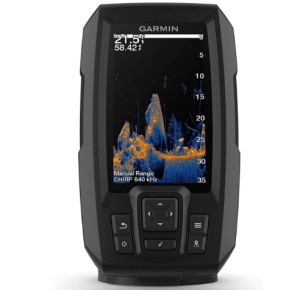
The Garmin STRIKER 4cv is a compact and easy-to-use fish finder that makes an excellent choice for anglers searching for one of the best fish finders for small boats. Its small footprint, straightforward keyed interface, GPS waypoint navigation, CHIRP sonar, and ClearVü scanning sonar provide useful fishing information without requiring a large or complicated marine electronics system. With a 3.5-inch display, it is particularly well suited to small boats where available mounting space is limited.
One of the main features of the STRIKER 4cv is its ClearVü scanning sonar. This high-frequency sonar produces near-photographic representations of objects, fish, and underwater structures around the boat. Instead of relying only on traditional fish arches, ClearVü gives anglers a more detailed picture of what is beneath the water.
This can be particularly useful when fishing around brush piles, submerged stumps, docks, rocks, vegetation, and other structures where fish may be hiding. The detailed imaging can help anglers better understand the underwater environment and identify promising fishing locations.
The STRIKER 4cv also uses CHIRP sonar, which sends a continuous sweep of frequencies into the water. This provides a broader range of information compared with traditional single-frequency sonar.
CHIRP technology can produce crisper fish arches and improved target separation, making it easier to distinguish individual fish when several targets are close together. For small-boat anglers, this combination of CHIRP traditional sonar and ClearVü scanning sonar provides two useful ways to examine the water.
The keyed interface with dedicated buttons is another practical feature. Rather than depending on touchscreen controls, the unit can be operated using physical buttons. This makes it straightforward to learn and convenient to use while fishing.
The unit is also designed to be easy to install, which can be an advantage for small-boat owners who want a fish finder without a complicated installation process. The STRIKER series is available in several display sizes, including 3.5-, 5-, and 7-inch versions, allowing anglers to choose a model appropriate for their available space and viewing preferences.
The built-in waypoint map allows anglers to mark and navigate to important fishing locations. You can save locations such as brush piles, submerged stumps, docks, and other productive areas, making it easier to return to them later.
This feature can be especially useful when fishing familiar waters. Instead of trying to remember where a productive structure is located, you can save the location and use the fish finder’s navigation features to return to it.
Despite its compact size, the STRIKER 4cv offers substantial depth capability. It can reach a maximum depth of approximately 1,600 feet in freshwater and 750 feet in saltwater, depending on conditions and installation.
Its relatively low power consumption is another advantage for small boats. The specified current draw is approximately 0.23 amp at 12 volts, which can help reduce the demand on a small boat’s electrical system.
The built-in flasher provides another way to view sonar information. Instead of the conventional scrolling sonar display, the flasher presents sonar data in a classic circular format.
This feature is particularly useful for ice fishing and vertical jigging, where anglers may want to monitor fish movement and their lure in real time directly beneath the boat or fishing hole. It adds versatility to an otherwise compact fish-finding system.
The fish finder carries an IPX7 water rating, providing protection against water exposure that can occur while fishing. This is an important consideration for small boats, where spray, rain, and splashing water can be common.
While the water-resistant construction adds durability, the unit should still be installed and maintained according to the manufacturer’s instructions to ensure reliable operation.
Key Specifications
- Display size: 3.5-inch diagonal
- Display dimensions: Approximately 1.9 × 2.9 inches
- Sonar: Garmin CHIRP traditional sonar
- Scanning sonar: ClearVü scanning sonar
- Maximum freshwater depth: Up to 1,600 feet
- Maximum saltwater depth: Up to 750 feet
- Built-in flasher: Yes
- Waypoint map: Yes
- Current draw: Approximately 0.23 A at 12V
- Water rating: IPX7
- Interface: Keyed controls with dedicated buttons
- Available display sizes in the STRIKER series: 3.5, 5, and 7 inches
Pros
- Compact 3.5-inch display is ideal for boats with limited mounting space.
- ClearVü scanning sonar provides detailed representations of fish, objects, and underwater structure.
- CHIRP sonar provides crisper fish arches and improved target separation.
- Physical keyed controls are simple and practical while fishing.
- Easy installation makes it suitable for beginners.
- Waypoint mapping allows anglers to mark and return to productive fishing locations.
- Excellent depth capability for a compact fish finder.
- Low current draw is useful for small-boat electrical systems.
- Built-in flasher makes the unit useful for vertical jigging and ice fishing.
- IPX7 water rating provides protection against water exposure.
Cons
- 3.5-inch display is relatively small and may be difficult for some anglers to view from a distance.
5.Garmin 010-01550-00 Striker 4 with Transducer, 3.5″ GPS Fishfinder with Chirp
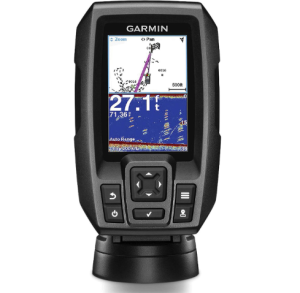
The Garmin STRIKER 4cv is a compact and easy-to-use fish finder that makes an excellent choice for anglers searching for one of the best fish finders for small boats. Its small footprint, straightforward keyed interface, GPS waypoint navigation, CHIRP sonar, and ClearVü scanning sonar provide useful fishing information without requiring a large or complicated marine electronics system. With a 3.5-inch display, it is particularly well suited to small boats where available mounting space is limited.
One of the main features of the STRIKER 4cv is its ClearVü scanning sonar. This high-frequency sonar produces near-photographic representations of objects, fish, and underwater structures around the boat. Instead of relying only on traditional fish arches, ClearVü gives anglers a more detailed picture of what is beneath the water.
This can be particularly useful when fishing around brush piles, submerged stumps, docks, rocks, vegetation, and other structures where fish may be hiding. The detailed imaging can help anglers better understand the underwater environment and identify promising fishing locations.
The STRIKER 4cv also uses CHIRP sonar, which sends a continuous sweep of frequencies into the water. This provides a broader range of information compared with traditional single-frequency sonar.
CHIRP technology can produce crisper fish arches and improved target separation, making it easier to distinguish individual fish when several targets are close together. For small-boat anglers, this combination of CHIRP traditional sonar and ClearVü scanning sonar provides two useful ways to examine the water.
The keyed interface with dedicated buttons is another practical feature. Rather than depending on touchscreen controls, the unit can be operated using physical buttons. This makes it straightforward to learn and convenient to use while fishing.
The unit is also designed to be easy to install, which can be an advantage for small-boat owners who want a fish finder without a complicated installation process. The STRIKER series is available in several display sizes, including 3.5-, 5-, and 7-inch versions, allowing anglers to choose a model appropriate for their available space and viewing preferences.
The built-in waypoint map allows anglers to mark and navigate to important fishing locations. You can save locations such as brush piles, submerged stumps, docks, and other productive areas, making it easier to return to them later.
This feature can be especially useful when fishing familiar waters. Instead of trying to remember where a productive structure is located, you can save the location and use the fish finder’s navigation features to return to it.
Despite its compact size, the STRIKER 4cv offers substantial depth capability. It can reach a maximum depth of approximately 1,600 feet in freshwater and 750 feet in saltwater, depending on conditions and installation.
Its relatively low power consumption is another advantage for small boats. The specified current draw is approximately 0.23 amp at 12 volts, which can help reduce the demand on a small boat’s electrical system.
The built-in flasher provides another way to view sonar information. Instead of the conventional scrolling sonar display, the flasher presents sonar data in a classic circular format.
This feature is particularly useful for ice fishing and vertical jigging, where anglers may want to monitor fish movement and their lure in real time directly beneath the boat or fishing hole. It adds versatility to an otherwise compact fish-finding system.
The fish finder carries an IPX7 water rating, providing protection against water exposure that can occur while fishing. This is an important consideration for small boats, where spray, rain, and splashing water can be common.
While the water-resistant construction adds durability, the unit should still be installed and maintained according to the manufacturer’s instructions to ensure reliable operation.
Key Specifications
- Display size: 3.5-inch diagonal
- Display dimensions: Approximately 1.9 × 2.9 inches
- Sonar: Garmin CHIRP traditional sonar
- Scanning sonar: ClearVü scanning sonar
- Maximum freshwater depth: Up to 1,600 feet
- Maximum saltwater depth: Up to 750 feet
- Built-in flasher: Yes
- Waypoint map: Yes
- Current draw: Approximately 0.23 A at 12V
- Water rating: IPX7
- Interface: Keyed controls with dedicated buttons
- Available display sizes in the STRIKER series: 3.5, 5, and 7 inches
Pros
- Compact 3.5-inch display is ideal for boats with limited mounting space.
- ClearVü scanning sonar provides detailed representations of fish, objects, and underwater structure.
- CHIRP sonar provides crisper fish arches and improved target separation.
- Physical keyed controls are simple and practical while fishing.
- Easy installation makes it suitable for beginners.
- Waypoint mapping allows anglers to mark and return to productive fishing locations.
- Excellent depth capability for a compact fish finder.
- Low current draw is useful for small-boat electrical systems.
- Built-in flasher makes the unit useful for vertical jigging and ice fishing.
- IPX7 water rating provides protection against water exposure.
Cons
- 3.5-inch display is relatively small and may be difficult for some anglers to view from a distance.
Also read;5 Best Fish Finders for Kayak Fishing
Factor to Consider when Choosing Best Fish Finder for Small Boats
1. Display Size and Visibility
Display size is one of the most important factors for a small boat because mounting space is often limited. Compact 3.5- or 4-inch screens are convenient when space is restricted, while 5-inch displays offer a good balance between portability and readability. A 7- or 10-inch display provides more viewing area but requires considerably more mounting space. You should also consider screen brightness and visibility when fishing in direct sunlight or while wearing polarized sunglasses.
2. Sonar Technology
The type of sonar technology determines how effectively the fish finder can identify fish and underwater features. CHIRP sonar is useful because it provides improved target separation and clearer fish arches. Scanning technologies such as ClearVü, DownScan, and MEGA Down Imaging can provide more detailed representations of fish, vegetation, rocks, and other structures. For anglers who want to examine underwater areas from different perspectives, Side Imaging can also be valuable.
3. Transducer Quality and Compatibility
The transducer is a critical part of any fish-finding system because it sends and receives the sonar signals. When choosing a fish finder, check whether a suitable transducer is included and what sonar technologies it supports. For example, some units include transducers capable of traditional CHIRP and scanning sonar, while advanced models may include 3-in-1 transducers with CHIRP, SideScan, and DownScan Imaging. Choosing a compatible transducer ensures that you can take full advantage of the fish finder’s capabilities.
4. GPS and Waypoint Navigation
Built-in GPS can make a fish finder much more useful on a small boat. GPS allows you to mark productive fishing locations such as brush piles, submerged stumps, drop-offs, docks, and other structures. You can then return to these locations during future fishing trips. GPS can also provide boat-speed information and, on some models, allow you to create routes. If you frequently explore unfamiliar waters, GPS should be an important consideration.
5. Mapping Capabilities
Mapping is another useful feature to consider, particularly if you fish lakes or waterways where detailed charts are available. Systems such as Garmin Quickdraw Contours, Humminbird AutoChart Live, C-MAP, LakeMaster, CoastMaster, and Navionics can provide depth and underwater contour information. Real-time mapping is especially useful because it can allow you to create your own maps while fishing, including information about depth contours, bottom hardness, and vegetation.
6. Ease of Installation and Controls
A fish finder for a small boat should be relatively easy to install and operate. Compact models with simple mounting systems can be particularly convenient when there is limited space. You should also consider whether you prefer physical buttons or touchscreen controls. Keypad controls can be useful in rainy or wet conditions because they can be operated without relying on a touchscreen. A straightforward interface is also beneficial for beginners who do not want to spend excessive time learning complicated menus.
7. Power Consumption and Water Resistance
Small boats may have limited battery capacity, so power consumption should not be overlooked. A fish finder with relatively low current draw can help reduce the load on the boat’s electrical system and extend battery operating time. Water resistance is equally important because fishing involves exposure to rain, spray, and splashing water. Look for a suitable marine water-resistance rating, such as IPX7, and always follow the manufacturer’s installation and usage instructions.
8. Fishing Style, Features, and Budget
Finally, choose a fish finder according to the type of fishing you actually do and the amount you are willing to spend. Casual anglers may only need basic CHIRP sonar and GPS, while serious anglers may benefit from Side Imaging, Down Imaging, advanced mapping, or live sonar such as ActiveTarget. Features such as built-in flashers can also be valuable for vertical jigging and ice fishing. There is little benefit in paying for advanced technology that you will rarely use, so focus on the features that directly support your fishing style and budget.
Frequent Asked Questions on Best Fish Finder for Small Boats
1. What size fish finder is best for a small boat?
A 3.5- to 5-inch fish finder is generally a good choice for small boats because it provides useful sonar information without taking up too much mounting space. A 7-inch model can be worthwhile if your boat has sufficient console space and you prefer a larger, easier-to-read display.
2. Is GPS important on a fish finder for a small boat?
Yes. Built-in GPS can be very useful because it allows you to mark waypoints, save productive fishing spots, create routes, and monitor boat speed. Some models also provide contour mapping, which can help you identify changes in water depth and underwater structure.
3. What sonar features should I look for in a fish finder for a small boat?
Look for CHIRP sonar for improved fish-target separation and clearer fish arches. If you want more detailed underwater information, consider scanning technologies such as ClearVü, Down Imaging, or Side Imaging. Your choice should depend on your fishing style, the type of water you fish, and your budget.
Conclusion
Choosing the Best Fish Finder for Small Boats can make fishing more convenient, efficient, and productive. The ideal model should offer clear sonar imaging, reliable GPS, useful mapping, simple controls, and a compact design that fits comfortably on your boat. By considering display size, sonar performance, transducer quality, power consumption, durability, and your fishing style, you can find a fish finder that provides the information you need without taking up unnecessary space. Ultimately, the right combination of features will help you locate fish and underwater structure with greater confidence on every trip.